Main Page Gallery Events Equipment Videos
Generals: Country Born/Died
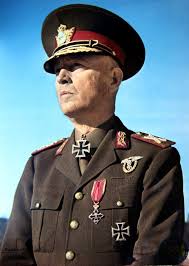
Ion Antonescu

September 6, 1940 – August 23, 1944

Gheorghe Manoliu

September 6, 1940 – August 23, 1944

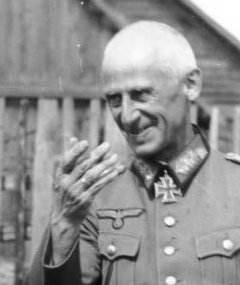
Hermann Hoth

21 mai 1888 – 28 august 1980

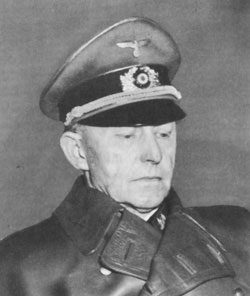
Alfred Jodl

10 May 1890 – 16 October 1946

Gheorghe Avramescu

26 ianuarie 1884 – 3 martie 1945

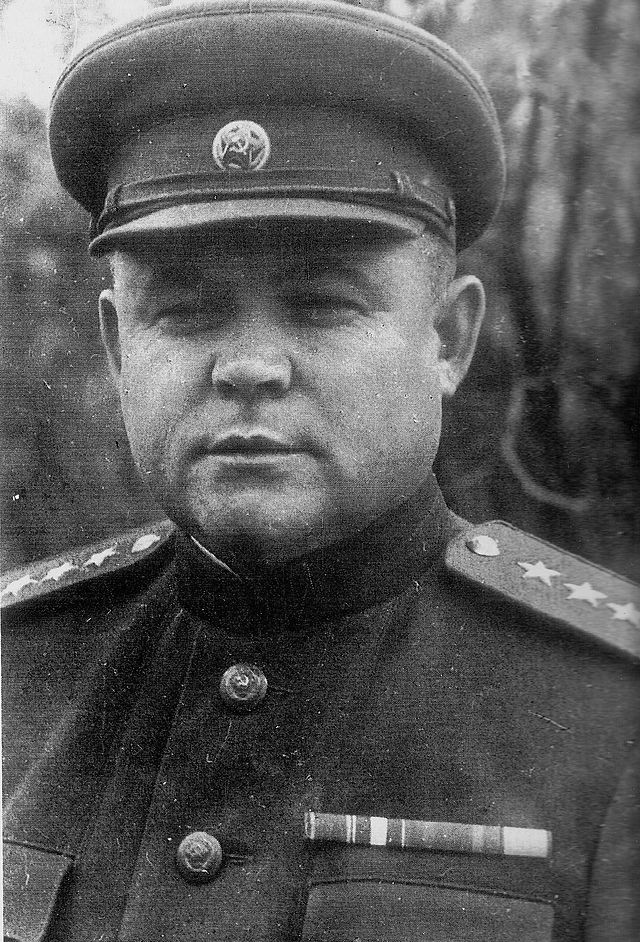
Fyodorovich Vatutin

16 December 1901 – 15 April 1944

Took control of Romania when Carol II abdicated, and established a fascist dictatorship with the Iron Guard Party. Gheorghe Avramescu was born into a peasant family. After enlisting in the military, he attended the Infantry Officers School between 1906 and Jul 1908. As a second lieutenant, he was a platoon leader with the Romanian 16th Dorobanti Regiment. Between 23 Sep 1910 and 1911, he attended the Special Infantry School. While serving with the 38th Infantry Regiment Neagoe Basarab, he married Adela Gologan. Between Oct 1913 and 1914, he attended the Military Academy. As Romania entered WW1, he was promoted to the rank of captain to command the 78th Reserve Infantry Regiment. He fought in the battles at Parachioi-Calaici, Mulciova, Perveli, and Muratan. In the latter battle, he was wounded in the right arm, taking him out of commission for a month. During the Battle of Bucharest between Nov and Dec 1916, he fought gallantly, and won the Steaua Romaniei Order Knight class with Virtute Militara ribbon at the beginning of 1917. In Sep 1917, he was promoted to the rank of major after commanding a battalion in the 78th Regiment earlier that year; he received the Coroana Romaniei Order Officer class with Virtute Militara ribbon in late 1917. Between Feb and Oct 1918, he was the chief officer of the Mobilization and Organization Bureau of the 1st Vanatori Division. In Dec 1918, he was named chief of the Intelligence Bureau of the 3rd Corps.

Alfred Josef Ferdinand Baumgärtler was born in Würzburg, Bavaria, Germany. His parents, army officer Alfred Jodl and Therese Baumgärtler, were not married until 1899, hence Jodl did not assume the name Alfred Jodl until that year. he was educated at the Cadet School in Munich, Germany, graduating in 1910, then joined the army as an artillery officer. In Sep 1913, he married Irma Gräfin von Bullion; they had no children. During WW1, he commanded an artillery battery on the Western Front between 1914 and 1916 where he wounded twice (once severely to his thigh), on the Eastern Front briefly in 1917, and then back on the Western Front as a staff officer at the end of the war. After WW1, he considered leaving the military and becoming a doctor, but he ultimately chose to remain in the German Army. In 1923, Jodl met Adolf Hitler. Through the 1920s, they worked together to gain influence for the Nazi Party. By 1935, at the rank of major general, he was named the Chief of the National Defense Section in the High Command of the Army (Abteilung Landesverteidigung im Oberkommando des Heeres, OKH). On 11 Mar 1938, he signed the order given by Hitler to invade Austria, then later that year commanded troops in Czechoslovakia during the annexation of that country. Between Oct 1938 and Aug 1939, he was a senior artillery officer with the 44th Division in Vienna, Austria. In Sep 1939, he led troops during the invasion of Poland. Between Oct 1939 and the end of the war, he was the Chief of Operations with the Supreme Command of the Armed Forces (Oberkommando der Wehrmacht, OKW), making him a key deputy to Wilhelm Keitel. In this role, he was among Hitler's top military advisors, personally involved in the planning of the invasions of Norway, Denmark, the Netherlands, and Greece. He was promoted to the rank of colonel general in Jan 1944. On 20 Jul 1944, during the July Plot on Hitler's life, Jodl was present in the meeting room with Hitler where a bomb planted by Claus von Stauffenberg.
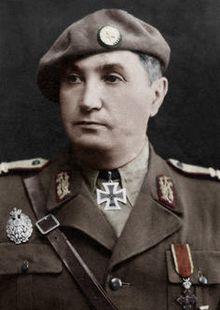
Petre Dumitrescu was born in 1882. Between 1901 and 1903, he attended the Romanian Artillery and Engineers Officers School; upon graduation, he was commissioned a second lieutenant. In 1906, he was promoted to the rank of lieutenant, followed by the rank of captain in 1911. Between 1911 and 1913, he attended the military academy in Bucharest, Romania. In 1920, he was promoted to the rank of lieutenant colonel. In 1930, he was promoted to the rank of brigadier general. In 1937, he was promoted to the rank of major general. Between 1937 and 1939, he was posted to Paris, France and then Brussels, Belgium as a military attaché. In 1940, he was made the commanding officer of Romanian 1st Army. In the following year, he was made the commanding officer of Romanian 3rd Army, a position which he would hold through WW2. He participated in Operation Barbarossa, overseeing the capture of territory in southwestern Ukraine taken from Romania in the previous year. He then took Romanian 3rd Army into Ukraine proper, advancing into Crimea by Oct 1941, capturing 15,565 Soviet prisoners of war at the cost of 10,541 casualties. For his achievement in Operation Barbarossa, he was awarded the Knight's Cross of the Iron Cross medal, becoming only the second Romanian to receive this German award; in the same month, he was awarded the Order of Michael the Brave 3rd Class. Continuing the advance, Dumitrescu led Romanian 3rd Army into southern Russia, but by Nov 1942, he would find his army to be on the retreat. Romanian 3rd Army suffered very heavy casualties in 1944 during the Soviet Jassy-Kishinev Offensive. When Romania surrendered and the new government turned on Germany, Dumitrescu continued to be in command and his units were credited with the capture of 6,000 German troops. After the war, he was tried for war crimes by the communist government in Romania. Acquitted, he retired from military service and passed away in 1950.

Hermann Hoth was born in Neuruppin, Germany to an army medical officer. He joined the Germany Army in 1903. During WW1, he was promoted to the rank of captain and won both classes of the Iron Cross award for bravery. During the inter-war years, he remained in the Germany military. In 1935, he was promoted to the rank of major general and was given command of the 18th Infantry Division. On 10 Nov 1938, he was promoted to the rank of lieutenant general and was given command of the XV Motorized Corps. Hoth led the XV Motorized Corps during the invasion of Poland at the start of the European War; on 27 Oct 1939, he was awarded the Knight's Cross award for his performance in Poland. In the following year, he participated in the invasion of France. On 19 Jul 1940, he was promoted to the rank of general. In 1941, as the commanding officer of the 3rd Panzer Group against Russia, his men captured the Byelorussian cities of Minsk and Vitebsk; he was awarded Oak Leaves to his Knight's Cross on 17 Jul 1941 for his victories in Byelorussia. In Oct 1941, he became the commanding officer of the 17th Army in Ukraine. In May 1942, the 17th Army was driven back at Kharkov. In Jun 1942, he became the commanding officer of the 4th Panzer Army and was ordered to support the 1st Panzer Army's crossing of the River Don in order to support German efforts at Stalingrad in Southern Russia. In Nov 1942, as the German 6th Army was trapped in Stalingrad, Hoth's 4th Panzer Army was the centerpiece of Erich von Manstein's Operation Winter Storm which aimed at relieving the 6th Army; by the end of the year, the operation was deemed a failure. In Jul 1943, Hoth and the 4th Panzer Army participated in the Battle of Kursk, where his divisions, the largest tank formations ever assembled, performed extremely well. On 15 Sep, he received Swords to his Knight's Cross award. Nevertheless, the successive Russian victories blemished his record, he he was relieved of his command in Nov 1943. In Apr 1945, Hoth was recalled to active duty. He commanded troops in defense of the Harz Mountains in the weeks of the war.

Nikolai Fyodorovich Vatutin was born in Chepujino, near Kursk, Russia into a poor peasant family. He attended the Infantry School of Poltava and was commissioned in the Russian Army in 1920. He fought against the Ukrainian peasant partisans of Nestor Makhno in 1920, and in the following year joined the communist party. Between 1926 and 1936, he attended the Frunze Military Academy and the General Staff Academy in-between several service assignments. In 1937, when Joseph Stalin began purging the Russian military of potential political enemies, Vatutin used it as an opportunity to advance, becoming the Chief of Staff of a Kiev Military District. In 1939, he planned for the Russo-German joint attack on Poland and served as the Russian Southern Group during the invasion. In 1940, while serving under Georgi Zhukov, his unit seized Bessarabia from Romania. Later that year, he was promoted to the rank of lieutenant general by Stalin and given the position of Chief of the Operational Directorate of the General Staff. He was at this post when Germany invaded the Soviet Union. 30 Jun 1941, Vatutin was appointed Chief of Staff of the Northwestern Front.

In June 1942, the 4th Mixed Mountain Division, intelligently led by General Gheorghe Manoliu, fought heroically in the fortified district on the ridges of Wald Kreuze and Keghel (two powerful casemates that dominated the entire region, north-east of the railway up to at the sea). The 4th Mountain Division was the only large unit that helped the German Army Corps 54 to penetrate the Ciornaia Valley and the only one to fly the tricolor flag on the commemorative monument of the 1854-1856 war in Sevastopol. On 20 March 1943 he was promoted to the General Division and appointed to the command of Territorial Corps 4, Iasi, withdrew to Dolj County, with the Balsa Command Point. Between August 23-31, 1944, Territorial Corps Iasi contributed to the expulsion of the German troops in the counties of Dolj, Gorj and Mehedinti. General Division Gheorghe Manoliu was retired with pension rights on March 27, 1945, at the age of 58, 38 of whom worked in the Romanian army.