The Battle of the Atantic
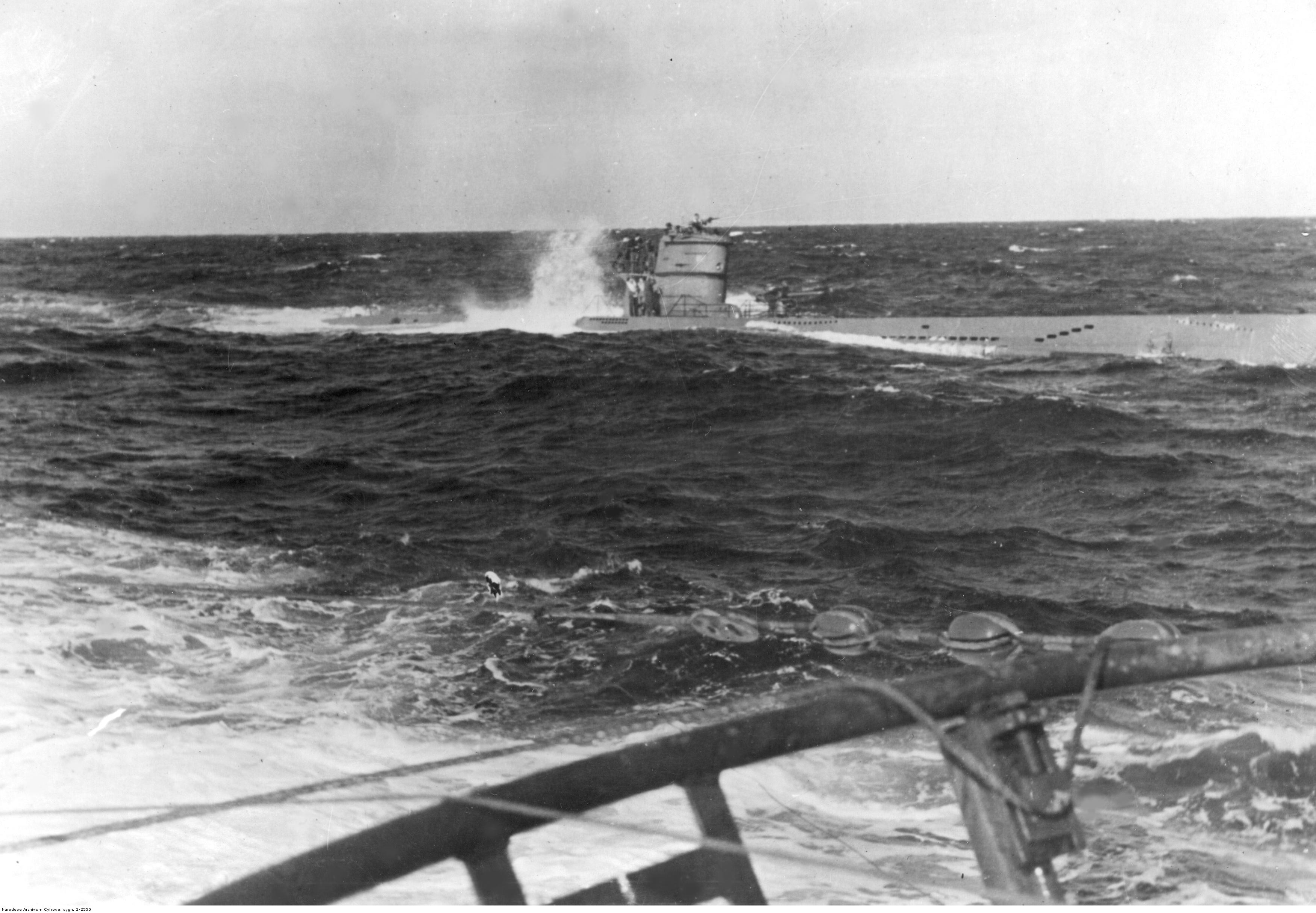
The Battle of the Atlantic was the longest continuous military campaign in World War II, running from 1939 to the defeat of Germany in 1945. It was a major part of the Naval history of World War II. At its core was the Allied naval blockade of Germany, announced the day after the declaration of war, and Germany's subsequent counter-blockade. It was at its height from mid-1940 through to the end of 1943. The Battle of the Atlantic pitted U-boats and other warships of the Kriegsmarine (German navy) and aircraft of the Luftwaffe (German air force) against the Royal Canadian Navy, Royal Navy, United States Navy and Allied merchant shipping. The convoys, coming mainly from North America and predominantly going to the United Kingdom and the Soviet Union, were protected for the most part by the British and Canadian navies and air forces. These forces were aided by ships and aircraft of the United States beginning September 13, 1941. The Germans were joined by submarines of the Italian Royal Navy (Regia Marina) after their Axis ally Italy entered the war on June 10, 1940.
As an island nation, the United Kingdom was highly dependent on imported goods. Britain required more than a million tons of imported material per week in order to be able to survive and fight. In essence, the Battle of the Atlantic was a tonnage war: the Allied struggle to supply Britain and the Axis attempt to stem the flow of merchant shipping that enabled Britain to keep fighting. From 1942 onwards, the Axis also sought to prevent the build-up of Allied supplies and equipment in the British Isles in preparation for the invasion of occupied Europe. The defeat of the U-boat threat was a pre-requisite for pushing back the Axis. The outcome of the battle was a strategic victory for the Allies—the German blockade failed—but at great cost: 3,500 merchant ships and 175 warships were sunk in the Atlantic for the loss of 783 U-boats (the majority being Type VII submarines) and 47 German surface warships, including 4 battleships (Scharnhorst, Bismarck, Gneisenau, and Tirpitz), 9 cruisers, 7 raiders, and 27 destroyers. Of the U-boats, 519 were sunk by British, Canadian, or other allied forces, while 175 were destroyed by American forces; 15 were destroyed by Soviets and 73 were scuttled by their crews before the end of the war for various causes.
The Battle of the Atlantic has been called the "longest, largest and most complex" naval battle in history. The campaign started immediately after the European war began, during the so-called "Phoney War", and lasted six years, until the German Surrender in May 1945. It involved thousands of ships in more than 100 convoy battles and perhaps 1,000 single-ship encounters, in a theatre covering millions of square miles of ocean. The situation changed constantly, with one side or the other gaining advantage, as participating countries surrendered, joined and even changed sides in the war, and as new weapons, tactics, counter-measures and equipment were developed by both sides. The Allies gradually gained the upper hand, overcoming German surface raiders by the end of 1942 and defeating the U-boats by mid-1943, though losses due to U-boats continued until war's end.
D-Day
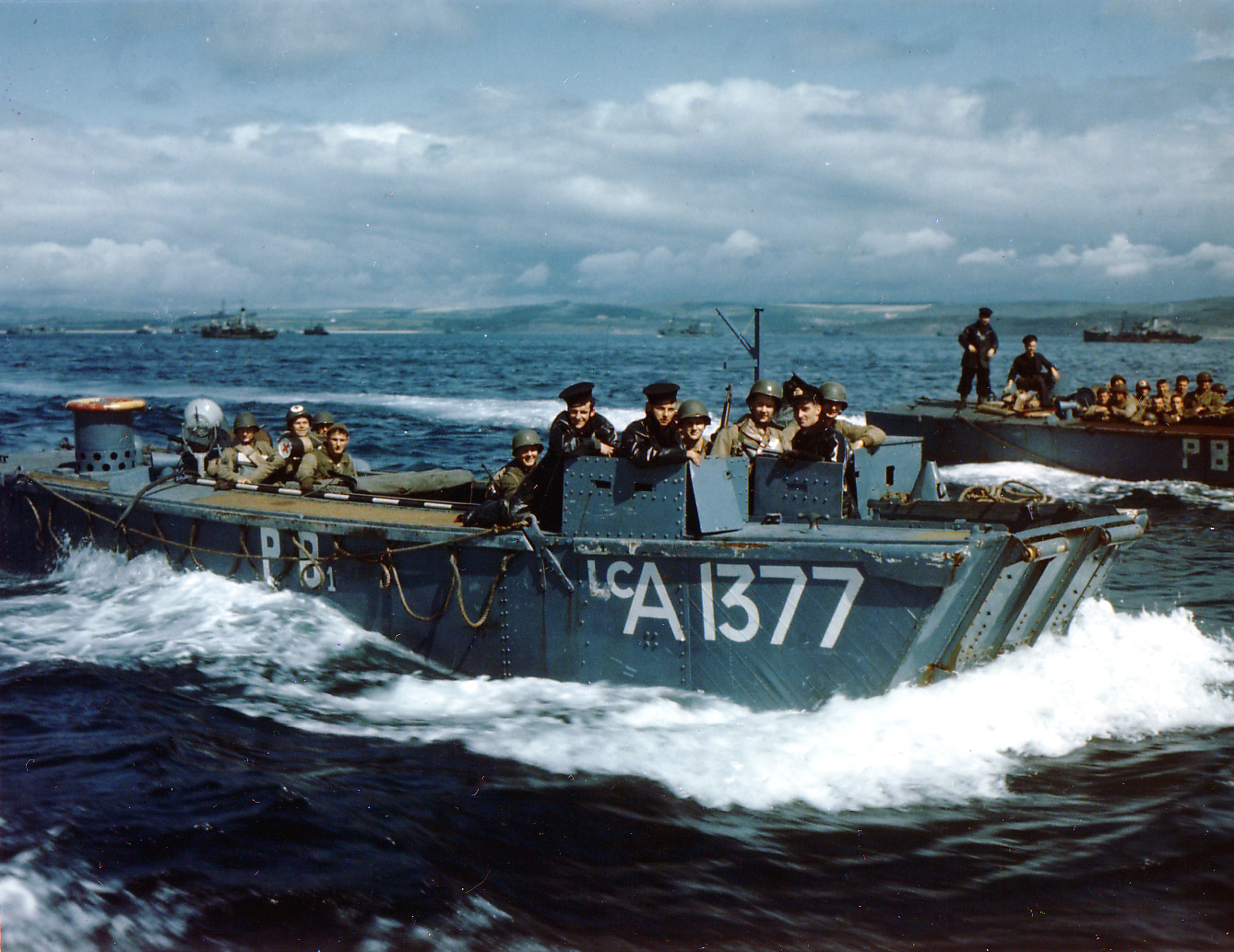
The Normandy landings were the landing operations on Tuesday, 6 June 1944 of the Allied invasion of Normandy in Operation Overlord during World War II. Codenamed Operation Neptune and often referred to as D-Day, it was the largest seaborne invasion in history. The operation began the liberation of German-occupied northwestern Europe from Nazi control, and laid the foundations of the Allied victory on the Western Front.
Planning for the operation began in 1943. In the months leading up to the invasion, the Allies conducted a substantial military deception, codenamed Operation Bodyguard, to mislead the Germans as to the date and location of the main Allied landings. The weather on D-Day was far from ideal and the operation had to be delayed 24 hours; a further postponement would have meant a delay of at least two weeks as the invasion planners had requirements for the phase of the moon, the tides, and the time of day that meant only a few days each month were deemed suitable. Adolf Hitler placed German Field Marshal Erwin Rommel in command of German forces and of developing fortifications along the Atlantic Wall in anticipation of an Allied invasion.
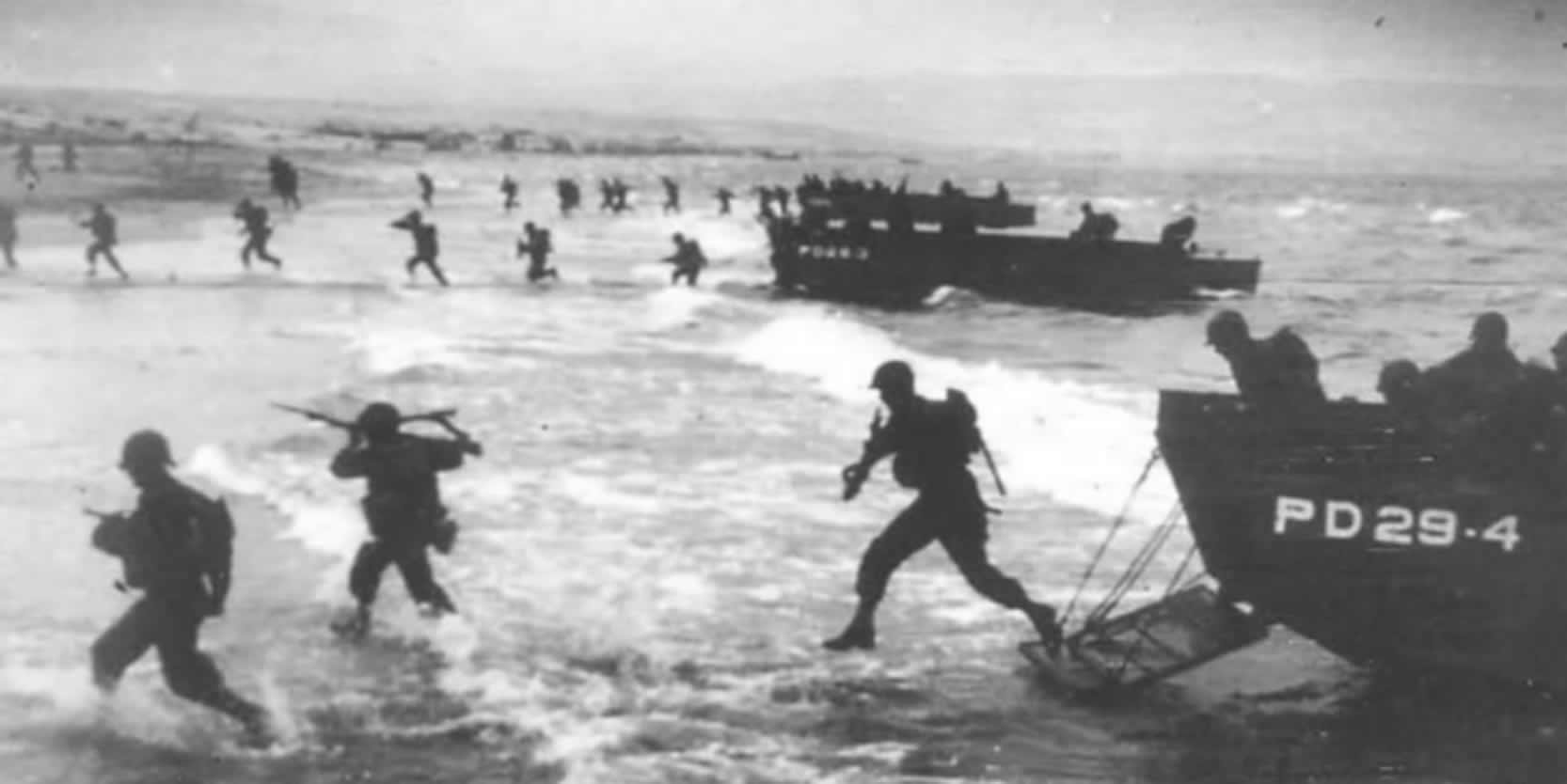
The amphibious landings were preceded by extensive aerial and naval bombardment and an airborne assault—the landing of 24,000 American, British, and Canadian airborne troops shortly after midnight. Allied infantry and armoured divisions began landing on the coast of France at 06:30. The target 50-mile (80 km) stretch of the Normandy coast was divided into five sectors: Utah, Omaha, Gold, Juno, and Sword. Strong winds blew the landing craft east of their intended positions, particularly at Utah and Omaha. The men landed under heavy fire from gun emplacements overlooking the beaches, and the shore was mined and covered with obstacles such as wooden stakes, metal tripods, and barbed wire, making the work of the beach-clearing teams difficult and dangerous. Casualties were heaviest at Omaha, with its high cliffs. At Gold, Juno, and Sword, several fortified towns were cleared in house-to-house fighting, and two major gun emplacements at Gold were disabled, using specialised tanks.
The Allies failed to achieve any of their goals on the first day. Carentan, St. Lô, and Bayeux remained in German hands, and Caen, a major objective, was not captured until 21 July. Only two of the beaches (Juno and Gold) were linked on the first day, and all five beachheads were not connected until 12 June; however, the operation gained a foothold which the Allies gradually expanded over the coming months. German casualties on D-Day have been estimated at 4,000 to 9,000 men. Allied casualties were at least 10,000, with 4,414 confirmed dead.
Operation Barbarossa
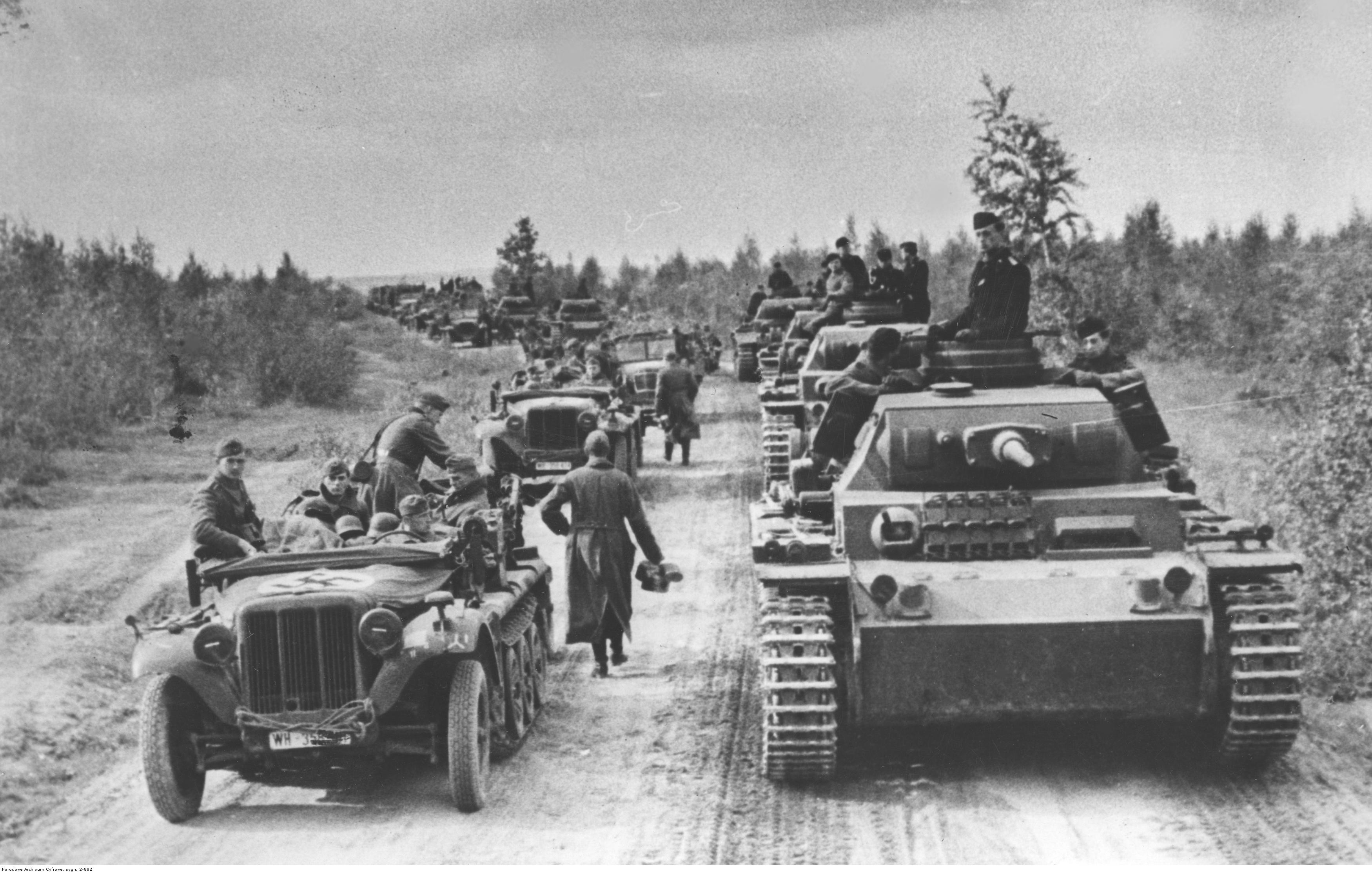
Operation Barbarossa (German: Unternehmen Barbarossa) was the code name for the Axis invasion of the Soviet Union, starting Sunday, 22 June 1941, during World War II. The operation stemmed from Nazi Germany's ideological aims to conquer the western Soviet Union so that it could be repopulated by Germans, to use Slavs as a slave-labour force for the Axis war-effort, and to seize the oil reserves of the Caucasus and the agricultural resources of Soviet territories.
In the two years leading up to the invasion, Germany and the Soviet Union signed political and economic pacts for strategic purposes. Nevertheless, the German High Command began planning an invasion of the Soviet Union in July 1940 (under the codename Operation Otto), which Adolf Hitler authorized on 18 December 1940. Over the course of the operation, about four million Axis powers personnel, the largest invasion force in the history of warfare, invaded the western Soviet Union along a 2,900-kilometer (1,800 mi) front. In addition to troops, the Wehrmacht employed some 600,000 motor vehicles, and between 600,000 and 700,000 horses for non-combat operations. The offensive marked an escalation of the war, both geographically and in the formation of the Allied coalition.
Operationally, German forces achieved major victories and occupied some of the most important economic areas of the Soviet Union, mainly in the Ukrainian Soviet Socialist Republic, and inflicted, as well as sustained, heavy casualties. Despite these Axis successes, the German offensive stalled in the Battle of Moscow and the subsequent Soviet winter counteroffensive pushed German troops back. The Red Army absorbed the Wehrmacht's strongest blows and forced the unprepared Germans into a war of attrition. The Wehrmacht would never again mount a simultaneous offensive along the entire strategic Soviet–Axis front. The failure of the operation drove Hitler to demand further operations of increasingly limited scope inside the Soviet Union, such as Case Blue in 1942 and Operation Citadel in 1943 – all of which eventually failed.
Stalin's reputation as a brutal dictator contributed both to the Nazis' justification of their assault and their faith in success; many competent and experienced military officers were killed in the Great Purge of the 1930s, leaving the Red Army with a relatively inexperienced leadership compared to that of their German counterparts. The Nazis often emphasized the Soviet regime's brutality when targeting the Slavs with propaganda. They also claimed that the Red Army was preparing to attack the Germans, and their own invasion was thus presented as a pre-emptive strike.